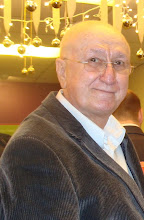
During a recent interview, 90 year old James Lovelock, originator of the Gaia Theory, was asked "Do you think we'll survive the coming global warming?" Here is his reply:
"I'm an optimistic pessimist. I think it's wrong to assume we'll survive 2 °C of warming: there are already too many people on Earth. At 4 °C we could not survive with even one-tenth of our current population. The reason is we would not find enough food, unless we synthesised it. Because of this, the cull during this century is going to be huge, up to 90 per cent. The number of people remaining at the end of the century will probably be a billion or less. It has happened before: between the ice ages there were bottlenecks when there were only 2000 people left. It's happening again.
"I don't think humans react fast enough or are clever enough to handle what's coming up. Kyoto was 11 years ago. Virtually nothing's been done except endless talk and meetings."
To read the full interview in New Scientist, click on the title of this post.
Monday, January 26, 2009

Friday, January 16, 2009
Founder of "Deep Ecology" dies at 96
Arne Naess, a Norwegian philosopher whose ideas about promoting an intimate and all-embracing relationship between the earth and the human species inspired environmentalists and Green political activists around the world, died Monday. He was 96.
In the early 1970s, after three decades teaching philosophy at the University of Oslo, Mr. Naess (pronounced Ness), an enthusiastic mountain climber and an admirer of Rachel Carson’s “Silent Spring,” threw himself into environmental work and developed a theory that he called deep ecology. Its central tenet is the belief that all living beings have their own value and therefore, as Mr. Naess once put it, “need protection against the destruction of billions of humans.”
Deep ecology, which called for population reduction, soft technology and non-interference in the natural world, was eagerly taken up by environmentalists impatient with shallow ecology — another of Mr. Naess’s coinages — which did not confront technology and economic growth.
It formed part of a broader personal philosophy that Mr. Naess called ecosophy T, “a philosophy of ecological harmony or equilibrium” that human beings can comprehend by expanding their narrow concept of self to embrace the entire planetary ecosystem. The term fused “ecological” and “philosophy.” The T stood for Tvergastein, his name for the mountain cabin he built in 1937 in southern Norway, where he often wrote.Wednesday, January 14, 2009
Telecommunications Tower To Be Built In West Hill
Bell Mobility has made application to the Ministry of Industry to build a
telecommunication tower on the CNR property located near Galloway Road.  The City of
Toronto does not have any legislative authority over the placement of these towers
but does mandate that a community meeting take place for community residents.  (They
are looking at the City to replace the earlier proposed one at the Guildwood
Presbyterian Church.)

At the end of 2007 150 people had jammed the Guildwood Community Presbyterian
Church just before Christmas, concerned about a proposal to build the tower at
the Church. The meeting had been
called by officials from Bell and Industry Canada, the federal agency
that governs telecommunications, to reassure residents that
electromagnetic radiation from the tower would pose no health threat
and that the tower will look like a flagpole. Although at 37 metres in
height, that would make for a very large flagpole indeed. One with a
large shed at its base.

The deal had been reached between the
Church and Bell Canada in back in April, but residents, only learned
about it on Nov. 8th, after Bell sent letters to about 70 homeowners in
the area informing them the tower would be built in the new year. Ward
43 Councilor, Paul Ainslie, told the meeting the city has developed a
protocol requiring telecommunications carriers to consult with the
municipality on tower locations as of January 1, 2008, but it couldn't
be backdated to this tower and wouldn't be binding on cell companies.

Under
the Radio Communications Act, Industry Canada has the final authority
to approve the location of telecommunication towers and antennae.
Municipal zoning by-laws do not have to be considered. A court decision
on March 2, 2007 determined that telecommunication installations are
not subject to site plan control since they are a Federal undertaking.

Many
people at the meeting were also angry that no church officials showed
up to explain why they made a 20-year lease deal with Bell without
first informing the community.

In the past, the City of Toronto
Board of Health have noted concerns that existing guidelines may not be
health protective for continuous lifetime exposure to radio frequency
(RF) electromagnetic levels and that several jurisdictions have adopted
stricter limits than those in Canada. In 1999, the Board of Health
recommended a prudent avoidance policy that RF waves from
telecommunication towers and antennas be 100 times below Safety Code 6
in areas where people normally spend time. The Medical Officer of
Health has recommended that the City collect data from cell phone
carriers on predicted RF levels of proposed towers and antennas to
allow the City to monitor the potential impact of proposed
telecommunication facilities in Toronto.

Bell
officials reassured residents that testing done at the base of other
towers showed the electromagnetic radiation is "thousands of times"
lower than acceptable levels; however, many at the meeting distrusted
the claim. Others felt that even if the tower was not a health threat,
they didn't want a flagpole more than twice as high as the church
steeple towering over their community.

Due to public pressure the applications was withdrawn but the tower
now proposed for CNR property at Galloway and the train tracks
behind the Boy's and Girls Club.
Monday, December 29, 2008
12 Tips For A Less Stressful 2009
For many people 2008 will go down as one of the most stressful in recent memory, and 2009 is promising more of the same.
Global Warming provides the paradigm for the social, economic and environmental damage we see around us. The trip to Global Warming is through Climate Change with increasingly radical, unpredictable and damaging weather patterns.
Coping with it all can be a major challenge, but there is a pathway we can follow, one that has been charted and followed for milennia by Zen Monks.
Fortunately, there is no need to renounce the world and become a monk in order to benefit from what they have learned.
.
According to the Zen Habits website ( http://www.zenhabits.net/2008/03/12-essential-rules-to-live-more-like-a-zen-monk/) these are twelve habits of Zen monks:. .
Wishing You A Happy And More Peaceful New Year!
Global Warming provides the paradigm for the social, economic and environmental damage we see around us. The trip to Global Warming is through Climate Change with increasingly radical, unpredictable and damaging weather patterns.
Coping with it all can be a major challenge, but there is a pathway we can follow, one that has been charted and followed for milennia by Zen Monks.
Fortunately, there is no need to renounce the world and become a monk in order to benefit from what they have learned.
.
According to the Zen Habits website ( http://www.zenhabits.net/2008/03/12-essential-rules-to-live-more-like-a-zen-monk/) these are twelve habits of Zen monks:. .
1. Do one thing at a time.
2. Do it slowly and deliberately.
3. Do it completely.
4. Do less.
5. Put space between things
6. Develop rituals .
7. Designate time for certain things.
8. Devote time to sitting.
9. Smile and serve others.
2. Do it slowly and deliberately.
3. Do it completely.
4. Do less.
5. Put space between things
6. Develop rituals .
7. Designate time for certain things.
8. Devote time to sitting.
9. Smile and serve others.
10. Make cleaning and cooking become meditation.
11. Think about what is necessary.
12. Live simply.
These are not easy to practice in our internet world, filled with all the demands of multi-tasking, which does not seem to simplify one's life. (It certainly can become a ritual, though.) 11. Think about what is necessary.
12. Live simply.
Wishing You A Happy And More Peaceful New Year!
Friday, December 19, 2008
What Hermann Scheer Thinks Of Ontario's Energy Policy
Check out this fantastic article in the Toronto Star today:
http://www.thestar.com/Business/article/555638 If the link doesn't work, just click on the title of today's post above.
"Ontario could power itself exclusively on renewable energy one day if it thought differently about the operation and design of its entire electricity system, says the chief architect of Germany's green-energy law.
German legislator Hermann Scheer, largely credited for pushing through the policies that have turned his country into a renewable-energy powerhouse, said the biggest challenge is overcoming the belief that large, centralized power plants based on nuclear fission and fossil fuels are necessary for an electricity system to operate reliably."
Great comments online as well.
http://www.thestar.com/Bus
"Ontario could power itself exclusively on renewable energy one day if it thought differently about the operation and design of its entire electricity system, says the chief architect of Germany's green-energy law.
German legislator Hermann Scheer, largely credited for pushing through the policies that have turned his country into a renewable-energy powerhouse, said the biggest challenge is overcoming the belief that large, centralized power plants based on nuclear fission and fossil fuels are necessary for an electricity system to operate reliably."
Great comments online as well.
Wednesday, November 26, 2008
Saturday, November 22, 2008
Subscribe to:
Posts (Atom)